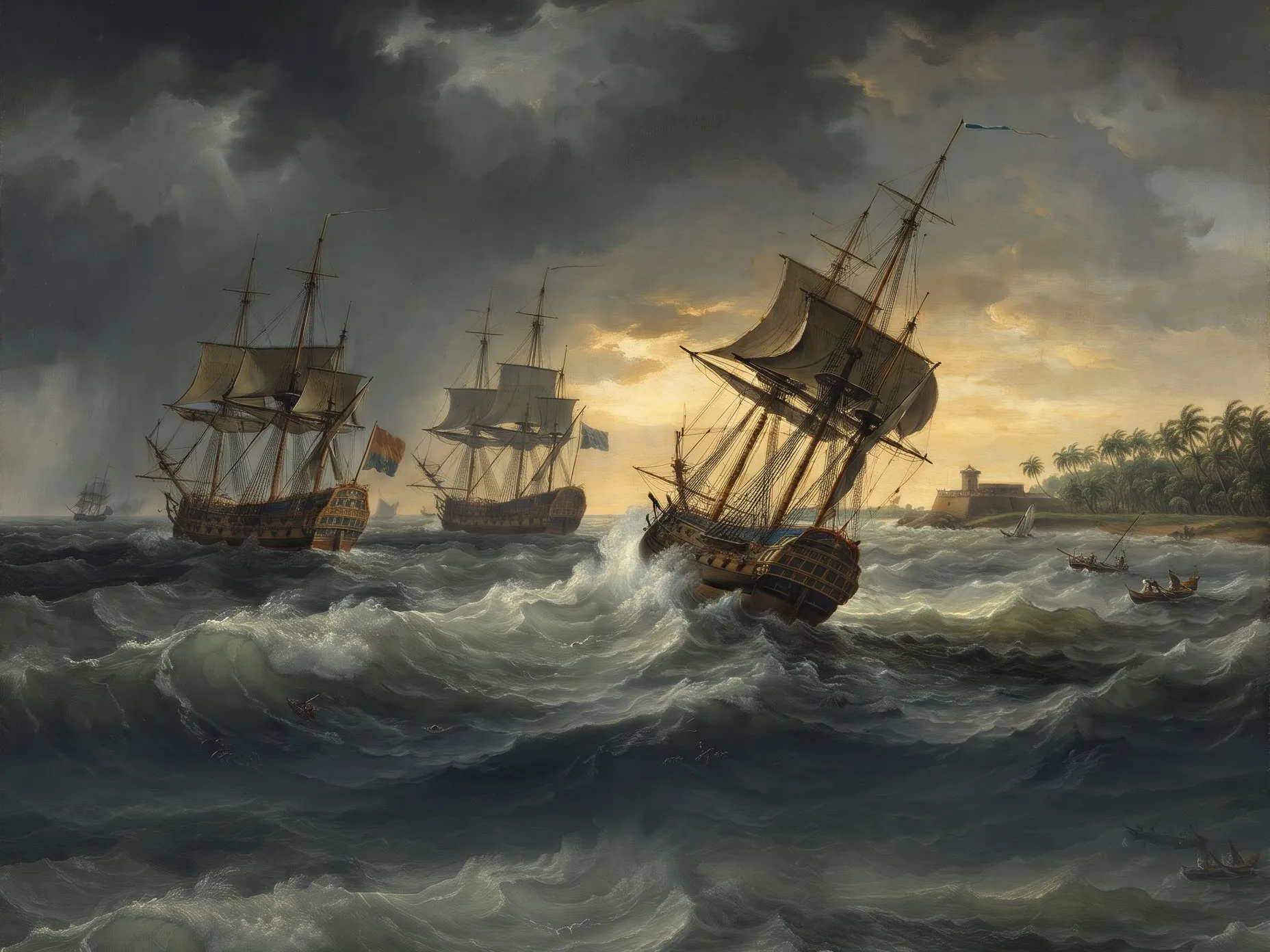
The story in short. A storm on 27 March 1762 sank the Sparenrijk, the Rhoon and the Rijder, three ships of the Dutch East India Company (VOC), while they lay at anchor off Matara loaded for the voyage home. More than 260 years later their wrecks have not been found.
| Date | 27 March 1762 |
|---|---|
| Ships | Sparenrijk, Rhoon and Rijder (VOC) |
| Where | The bay between Polhena reef and the Nilwala river mouth |
| Also lost in the storm | The Mariënbos, in Colombo harbour |
| Found so far | None of the three |
| Main record | Generale Missiven, vol. 14, p. 261 |
A busy anchorage
In the middle of the 18th century, Matara was one of the most important places on the Dutch-ruled coast of Ceylon. Cinnamon from the southern lowlands was the Company's most valuable export from the island, and Matara sat at the centre of that trade. Ships loaded their cargo in the open roadstead off the town, then set off for the Netherlands by way of the Cape of Good Hope.
An open roadstead is a risky place to be when the weather turns. There was no harbour wall and no shelter, only anchors and luck. In March 1762, the luck ran out.
The town had also just been through a turbulent time. In 1760 the Matara Rebellion broke out, sparked by the Dutch plan to register local people's land holdings, and the people of the south rose in resistance. By March 1761, Kandyan forces and local freedom fighters held the fort and the Dutch garrison had been evacuated to Galle. Matara stayed in the hands of the resistance for nearly a year, until the Dutch retook it in February 1762, only weeks before the storm.
Meet the ships
The Sparenrijk was the veteran. Built in Amsterdam in 1745 for the VOC's Amsterdam chamber, she was an armed merchantman about 38.5 metres long and rated at 850 tons, with a crew of between 174 and 236 men. She had made four round trips to the East Indies, and the voyage home from Matara was her fifth, under Captain Andries Lint.
The Rhoon was bigger and newer. Built in 1752 at Middelburg for the Zeeland chamber, she was about 150 feet long and rated at 1,150 tons. She had completed two voyages to Asia and was on the way home from her third, under Captain Jan Bernard Schaper. Shipping records show her leaving Rammekens in the Netherlands on 9 March 1761 and reaching Ceylon on 23 September 1761, about six months before the storm. The heritage record says she was sailing with the Sparenrijk and the Rijder when it struck.
The Rijder is the mystery. The Dutch records name her among the ships lost at Matara, but we have found almost nothing about her size, her crew or her captain.
The day it went wrong
Picture only what the records tell us: three heavily laden ships, anchors down, in open water on a coast with no shelter. Then a storm.
We do not know what happened in those hours. The sources we found do not say how many people died, what each ship was carrying, or exactly where in the bay each one went down. What we do know is that the same storm also wrecked a fourth VOC ship, the Mariënbos, in the harbour at Colombo. She had been built in 1744 as the Lekkerland and renamed in 1759, and she was homeward bound on her fifth voyage, her first under the new name. For the Company it was one of the worst single days of the century in Ceylon.
The main record is a short entry in the Generale Missiven, the official reports sent from Batavia to the VOC's directors in the Netherlands (volume 14, page 261). A few lines of ink for four ships and a season's homeward cargo.
The Dutch did not forget how exposed Matara had been that year. Between 1763 and 1765 they built the Star Fort, which still stands in the town, to strengthen the defences after the uprising.
Why they have not been found
Wooden ships do not last in warm tropical seas. Shipworm and bacteria eat a hull within decades. What survives of an 18th-century wreck in Sri Lankan waters is usually the heavy, hard material:
- iron cannons and cannonballs
- anchors
- ballast stones and bricks
- pottery, glass, and sometimes copper or bronze fittings
After two and a half centuries of monsoon swells and sediment from the Nilwala river, most of that is probably buried under sand. These are not wrecks that stand proud of the seabed and light up a depth sounder. They are low, scattered sites that are easy to swim straight past.
The south coast is also hard to work. The swell season shuts down diving here for months each year, and no detailed survey of the old Matara anchorage has ever been published.
Protected by law
Shipwrecks more than 100 years old are protected under Sri Lanka's Antiquities Ordinance. It is illegal to disturb them or remove anything from them, and anyone who finds one has to report it.
Dive Matara's history with us
You do not need to find a lost VOC ship to dive history here. Our regular boat dives are on the same stretch of south coast that ships have passed for centuries: see the dive sites off Mirissa, Weligama and Matara, or the Wombat Wreck in the high season.
Sources
- Generale Missiven (reports from Batavia to the VOC directors), vol. 14, p. 261, Huygens Institute, online “retroboeken”.
- Maritime Stepping Stones (MaSS) database, Rijksdienst voor het Cultureel Erfgoed: Sparenrijk and Rhoon.
- Huygens Institute, Dutch-Asiatic Shipping database: voyage record.
- Ship Index, Rhoon voyage entries (departure from Rammekens 9 March 1761, arrival in Ceylon 23 September 1761): shipindex.org.
- MaSS record for the Mariënbos (ex Lekkerland).
- Richard Boyle, “Colonial Matara: Of elephants, merchants and a land to plunder”, Sunday Times (Sri Lanka), 2010: article (the Matara Rebellion, the Dutch retaking of the fort in February 1762, and the Star Fort).
- Antiquities Ordinance of Sri Lanka: full text (PDF).
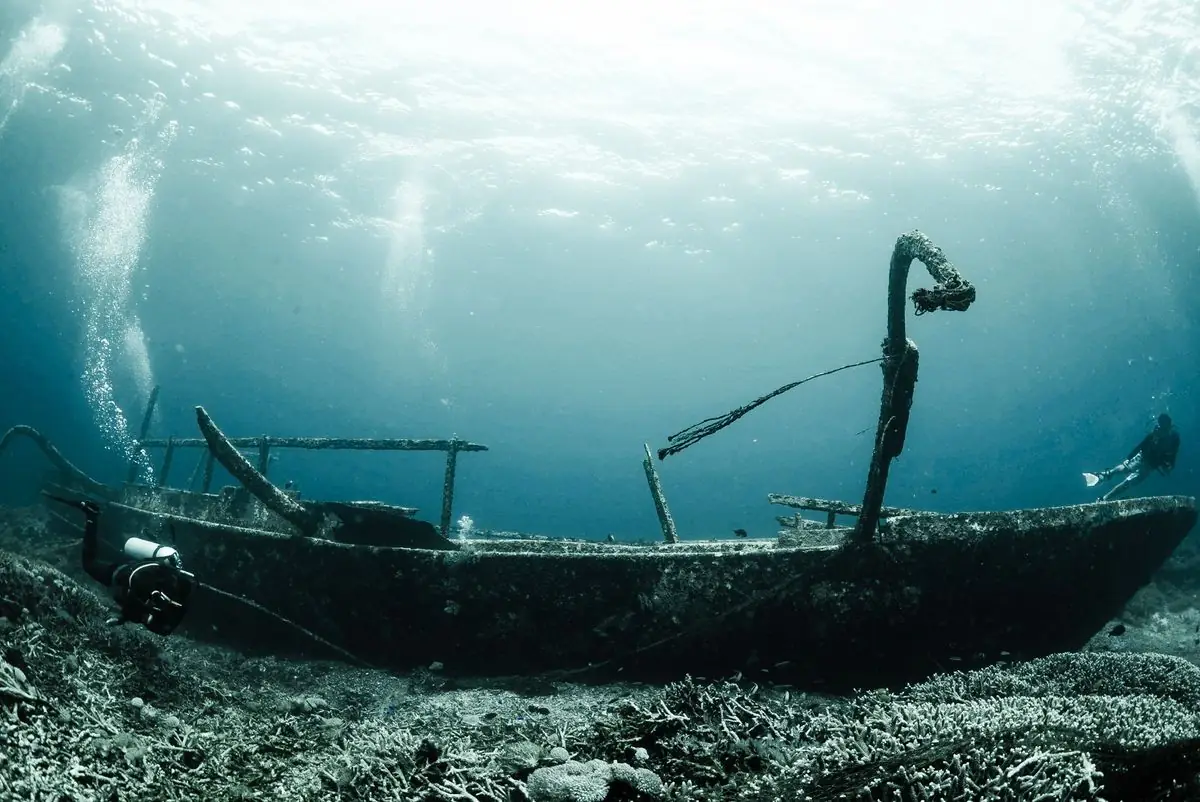 The Wombat Wreck
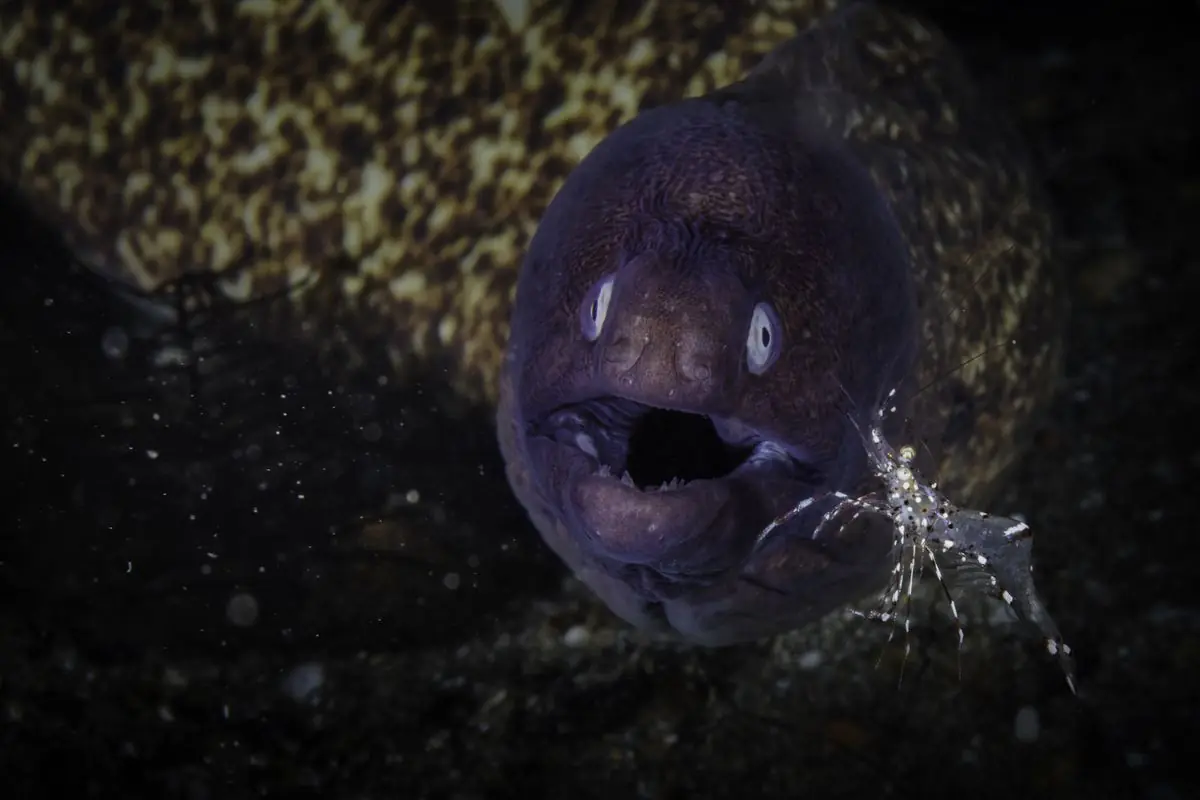 Dive sites off Mirissa
 Best time to dive in Sri Lanka